Had I left South Korea by just going on the standard Panmunjom Tour through the DMZ, my experience and understanding of the conflict would have been vastly different. But prior to leaving on my trip, I discovered a newly formed private tour company that offered an "authentic" glimpse. I debated and then finally booked it, even though there was very little information to be found on the internet about it. This decision led to one of the most memorable days of my life.
After an early start, the driver, tour guide and I again drove towards the 38th parallel. Seoul itself has a lot of traffic congestion but as one moves north, it drops considerably. The landscape also changes from that of an ultra-modern metropolis to a rural war zone, barbed wire fence and observation posts lining the waterways while military vehicles patrol the roads. Bypassing Imjingak, the tour guide told me our first stop would be an active military base one hour away. From the back seat, I stared out the window wondering what I'd gotten myself into.
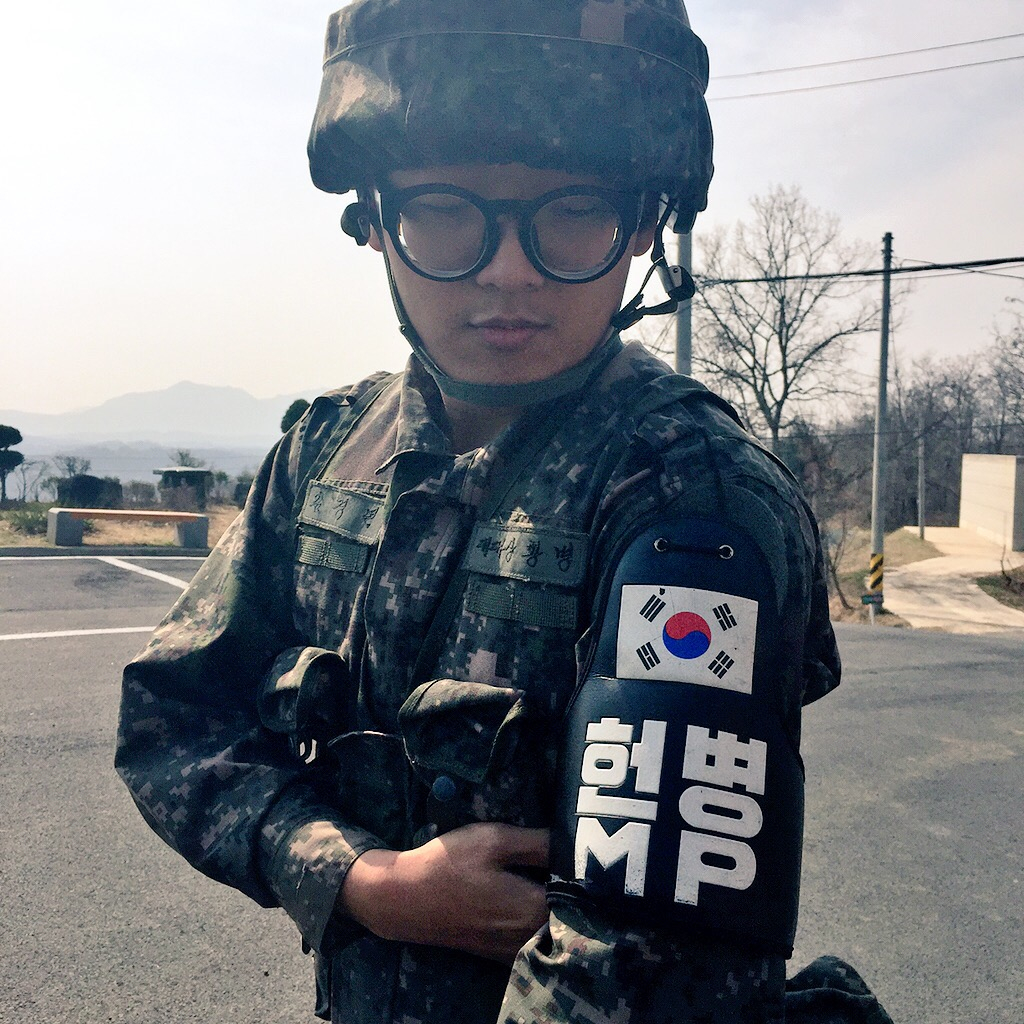
When we finally got there, I had to give them my passport. It would be returned when I left. Young men, who probably weren't older than 20-years-old but appeared much younger, roamed the grounds carrying the biggest guns I have ever seen in my life. Most of them looked like they'd rather be playing a video game or, at the very least, back home with loved ones rather than at this remote location where laying in wait seemed to be the modus operandi. They looked at me with curiosity and then, ultimately, a warm smile and jovial attempt at "hello".
The tour guide explained life on the base and then brought me to a look-out where I glimpsed another vista of the hermit kingdom. In the near distance, blue United Nations flags swung in the breeze and just beyond that, North Korean watchtowers dotted the landscape. The tour guide warned me to not take any pictures and made a gesture with his arms indicating being handcuffed if I were to do so.
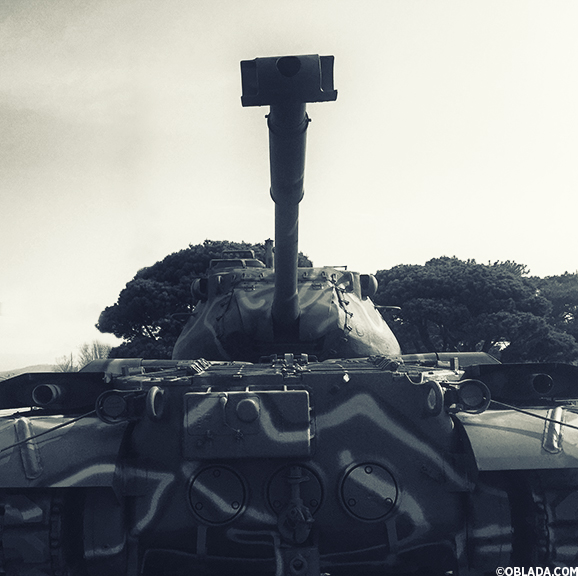
There were opportunities though. On our way to the next base, another hour away, we came across military training. "You are very lucky to witness this" both the tour guide and driver informed me. "Not many people get to see it". Soldiers marched alongside the highway; they would walk 30km while carrying 30kg. Camouflaged tanks were being set up in the fields. Everyone I encountered waved and seemed as genuinely surprised to see me as I was to witness this moment in modern history.
At the next military base, we drove up a large hill to another lookout. A group of soldiers stood around laughing at each other's jokes, but when we entered, adopted an air of seriousness. One stepped forward and in perfect English gave me the history of the location and directed me to various landmarks visible to the naked eye. He then gave me his binoculars to get an even more intimate view including that of a small, dilapidated North Korean farming village. "Look over here" he exclaimed, pointing out four North Korean soldiers marching just beyond the river below which marked the natural border of the DMZ. I couldn't believe what I was seeing. Whereas the absurdity of the previous day seemed to minimize the seriousness of the situation, this experience illuminated its gravity.
"What do you do if you encounter a North Korean soldier?" I asked.
"We kill them."
I again peered through the binoculars at one of the watchtowers parallel to me. There sat a North Korean soldier observing our every move.