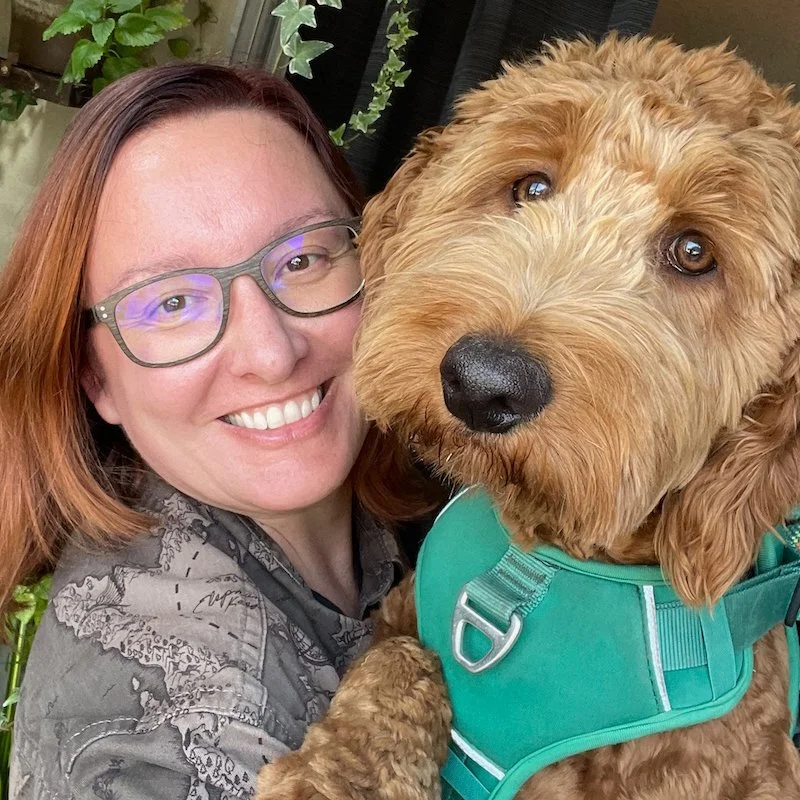
My lil’ dood, nine months old.


When speaking of the beauty of this great country, most would inevitably reply with the Crown Jewels of our nation: the dual Rocky Mountain townships of Banff and Jasper, Alberta, topographic wonderlands of sweeping mountain vistas, lush forest and aquamarine lakes that leave an imprint on all who visit. I’ve been lucky to visit many, many times. As a western Canadian, these places feel like home. They are home. This past week has brought much sadness as one of those Jewels was tarnished by wildfire.
I reflect upon the wonderful memories had and look forward to the day I can create new ones.
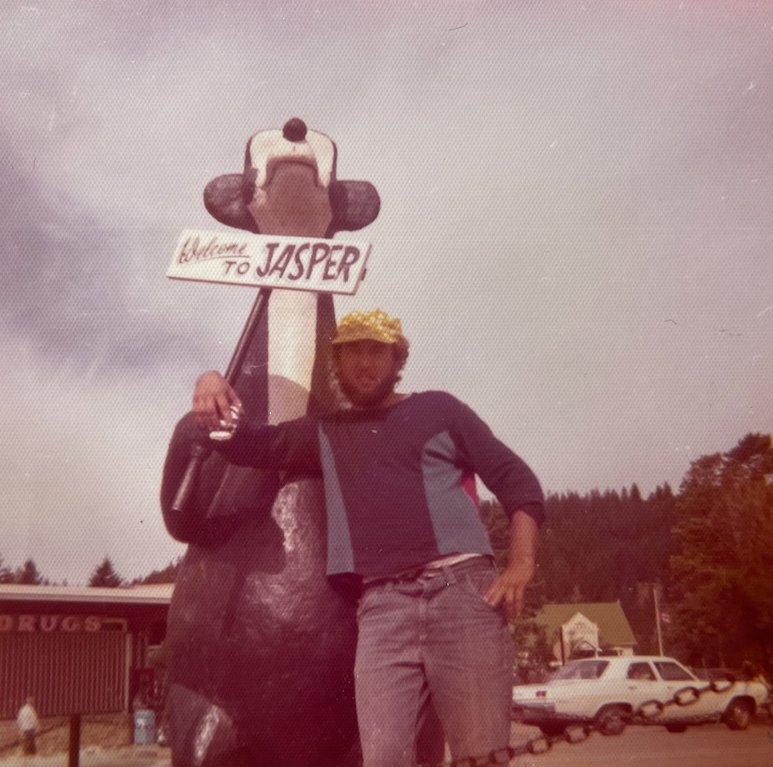
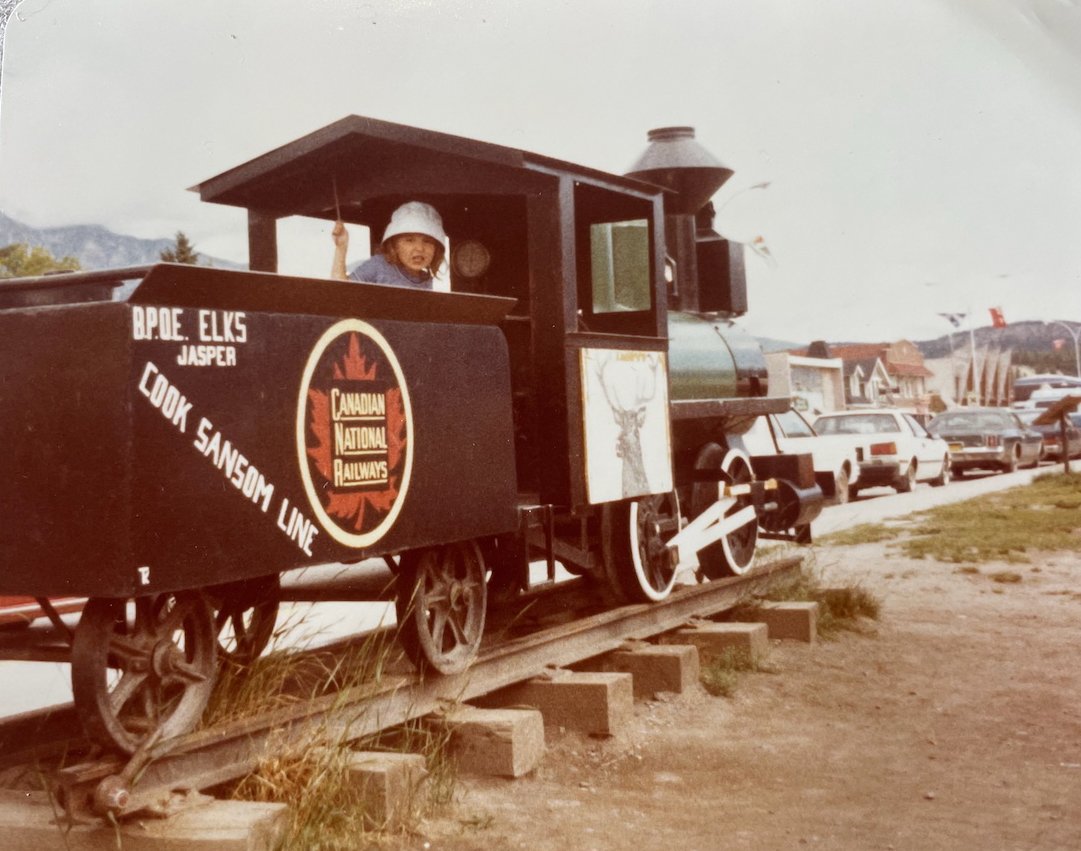
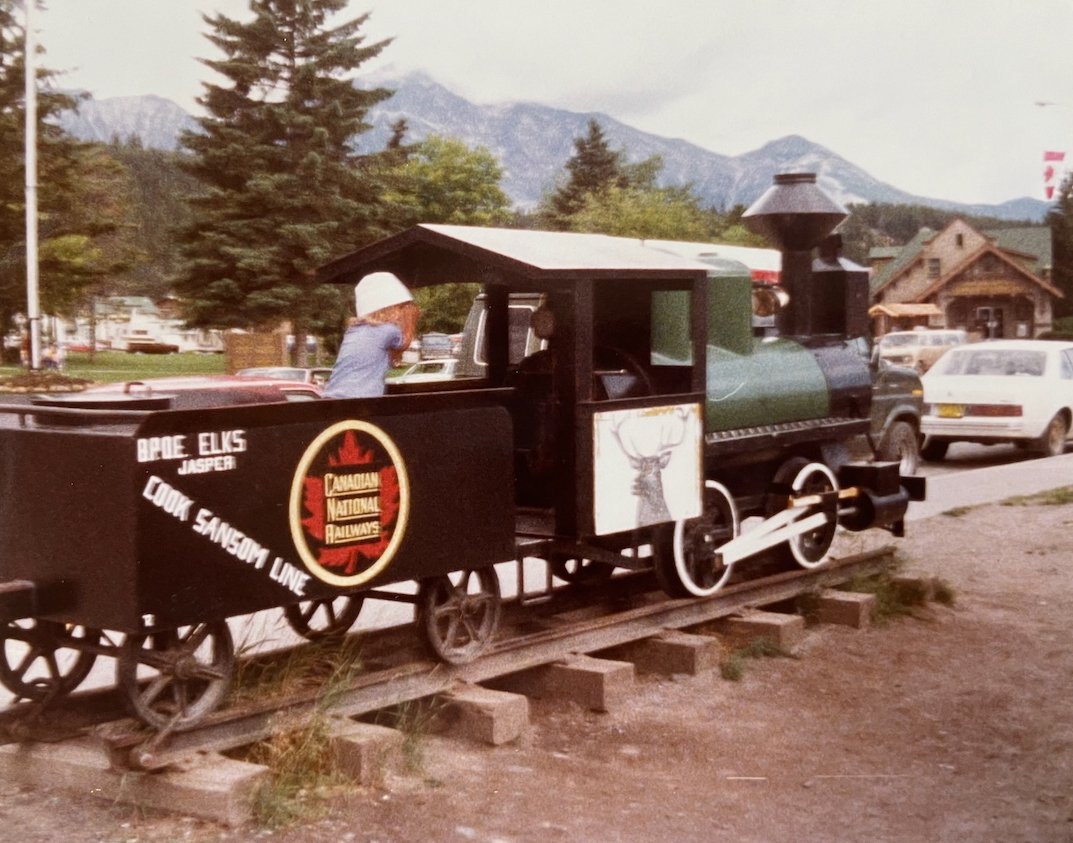
There was no aux cord in the car in 1991. Air conditioning wasn’t even a standard feature, at least in the class of sedan my parents could afford. As such many of my summertime childhood memories revolve around daydreaming in the backseat, window down with a breeze through my hair, as we listened to songs on the radio. The lyrics of which I was too young to comprehend or understand their lasting imprint on my life.
AM was a mixed bag of golden oldies and angry citizens calling into conservative talk radio shows that claimed to give a voice but aimed to cause dissent. These stations were reserved for long-haul road trips throughout Western Canada and the Dakotas when radio signals were weak and they were the only thing we could pick up.
FM was much better to my ears, as it featured songs that seemed relevant to the energy of the times. And it was through these stations that artists I didn’t naturally gravitate towards provided the soundtrack to my life. Artists like The Tragically Hip, who are so engrained in Canadiana lore (and radio playlists) that it’s sometimes taken for granted how woven their work is into the tapestry of our lives. I can still see my father behind the wheel, arm relaxed on the driver-side window, with their music playing through the speakers as the heat of the sun guided us down Highway 9 to a day in lake country.
At the time, I didn’t know that Bobcaygeon was a township. Or that I would one day cross the 100th meridian to live in the Paris of the Prairies where Wheat Kings reign. Now that I’m older, these lines hold deeper resonance linking lyric to memory to sense of home. I seek them out for comfort, as nostalgia often provides in abundance (albeit with a shot of sadness for what once was). I may not have the carefree spirit I once did, unaware of the ways of the world and the people who inhabit it, but I now fully comprehend that it’s a good life if you don’t weaken. Soldier on.
A recent news story brought together the appreciation of these lyrics with my love of design and vintage travel artwork. A Hip Trip is an absolutely beautiful set of limited edition posters featuring Canada reflected through their music. Graphic artists John Belisle and Adam Rogers did a phenomenal job of bringing them to life and also inspiring me to elevate my own game as a designer. This is the type of work I would like to create; work that is artistic, meaningful and showcasing a refined sense of craft and skill.
In the meantime, these are going to look amazing framed on my walls.


My best friend of the past four months is keeping me busy. Being in advertising/design, I’ve also gotten to put him in some of my work (earning those treats).
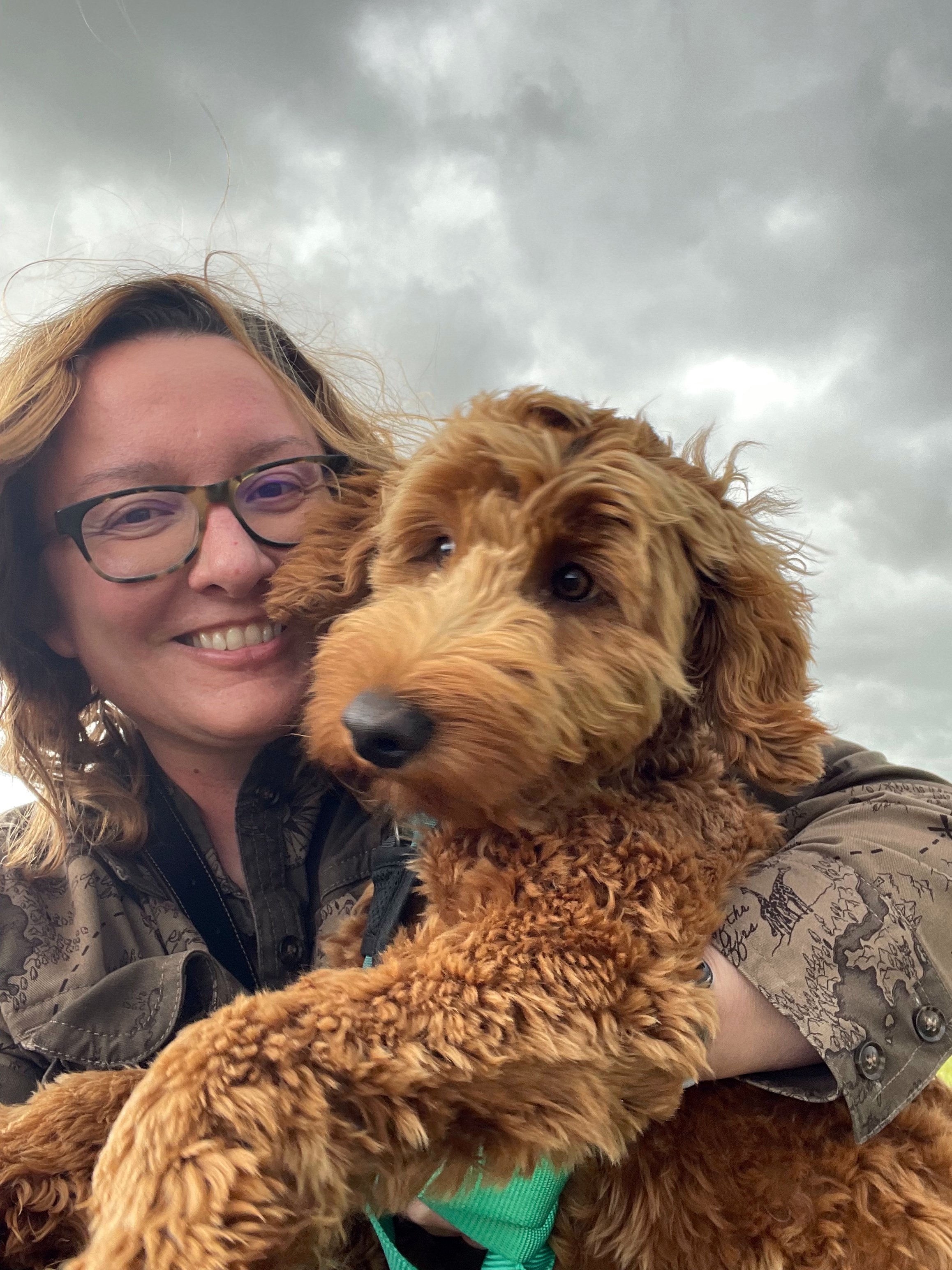
Ham at six months (©2024, Deborah Clague).
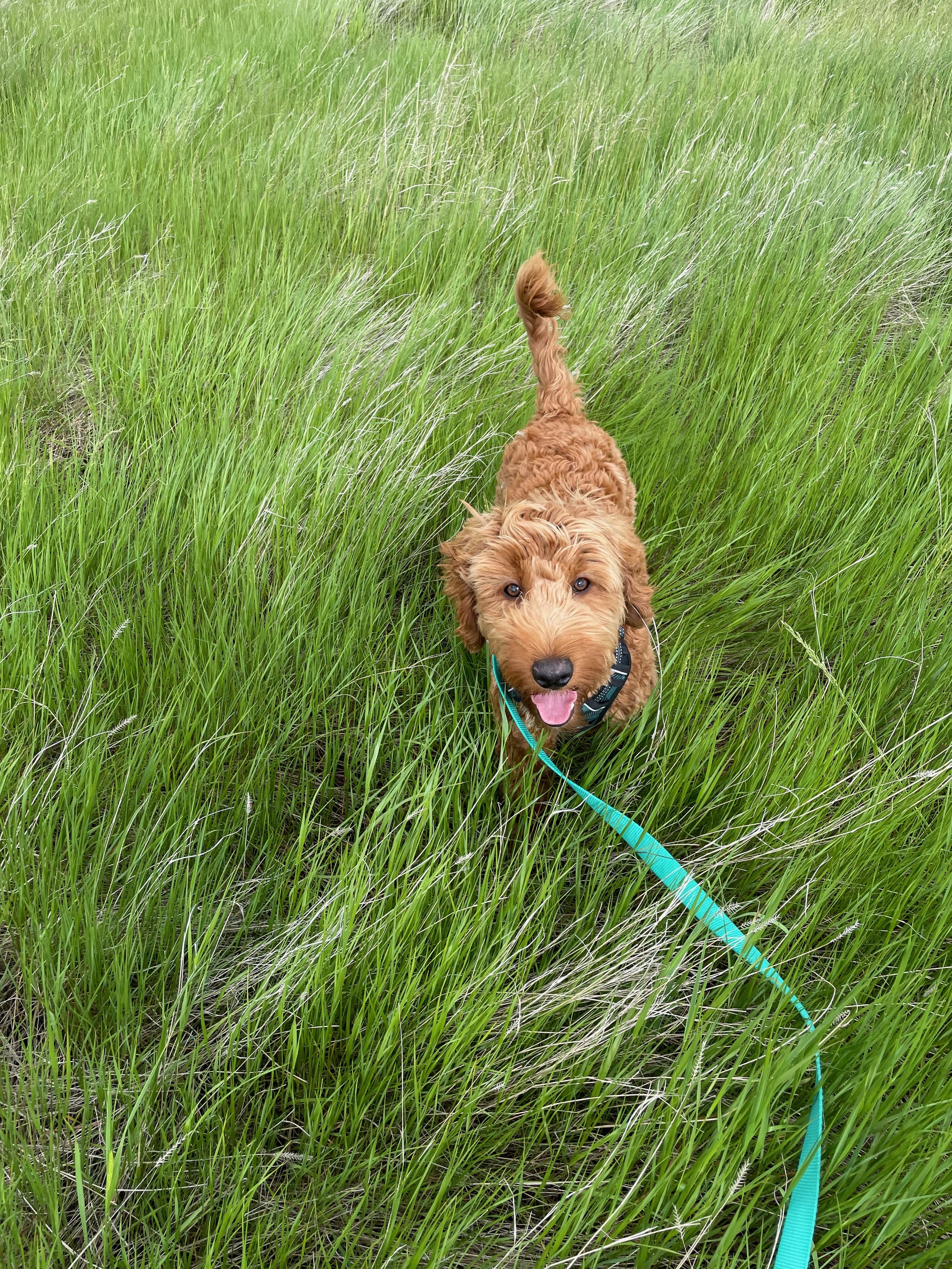
Ham at six months (©2024, Deborah Clague).
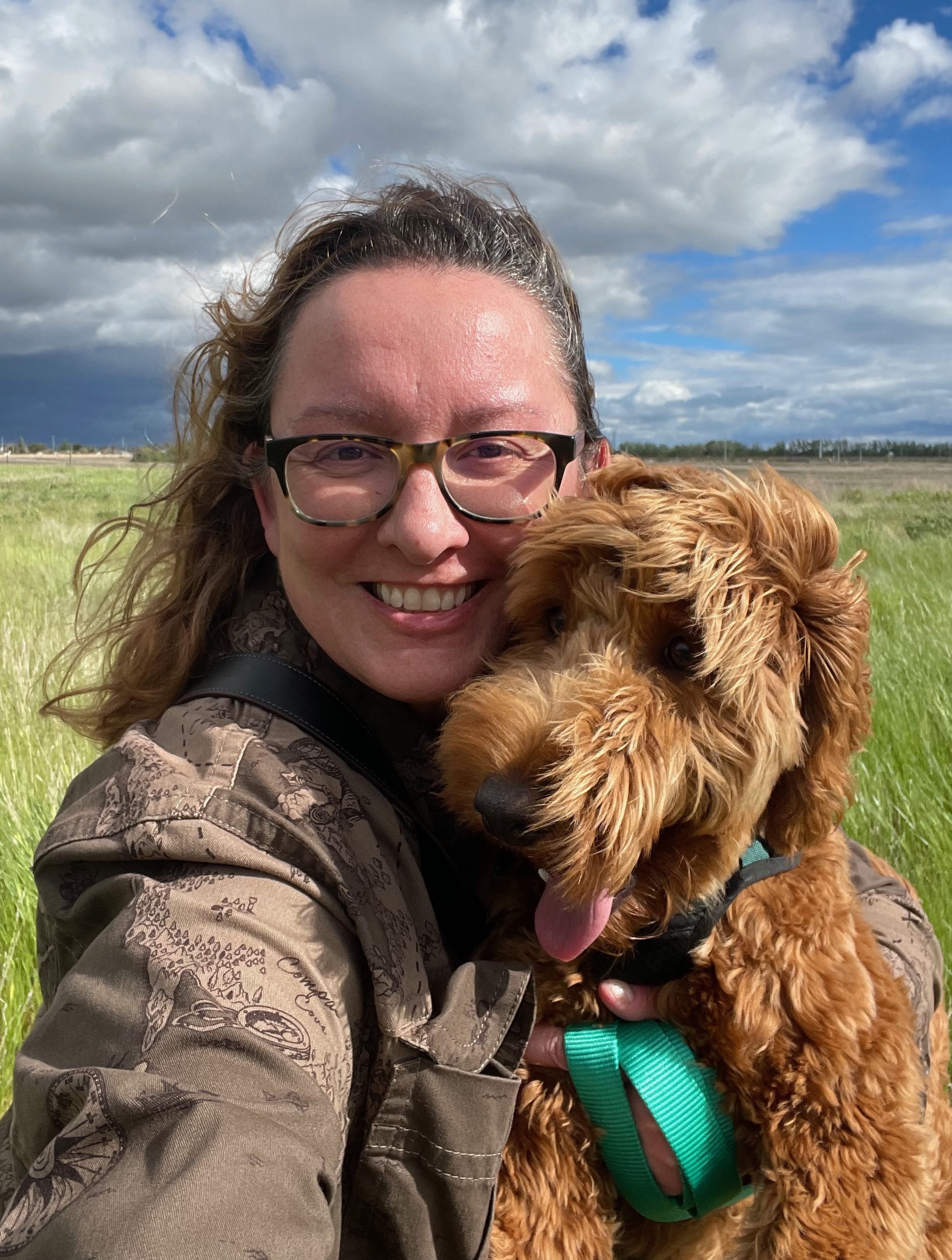
Ham at six months (©2024, Deborah Clague).
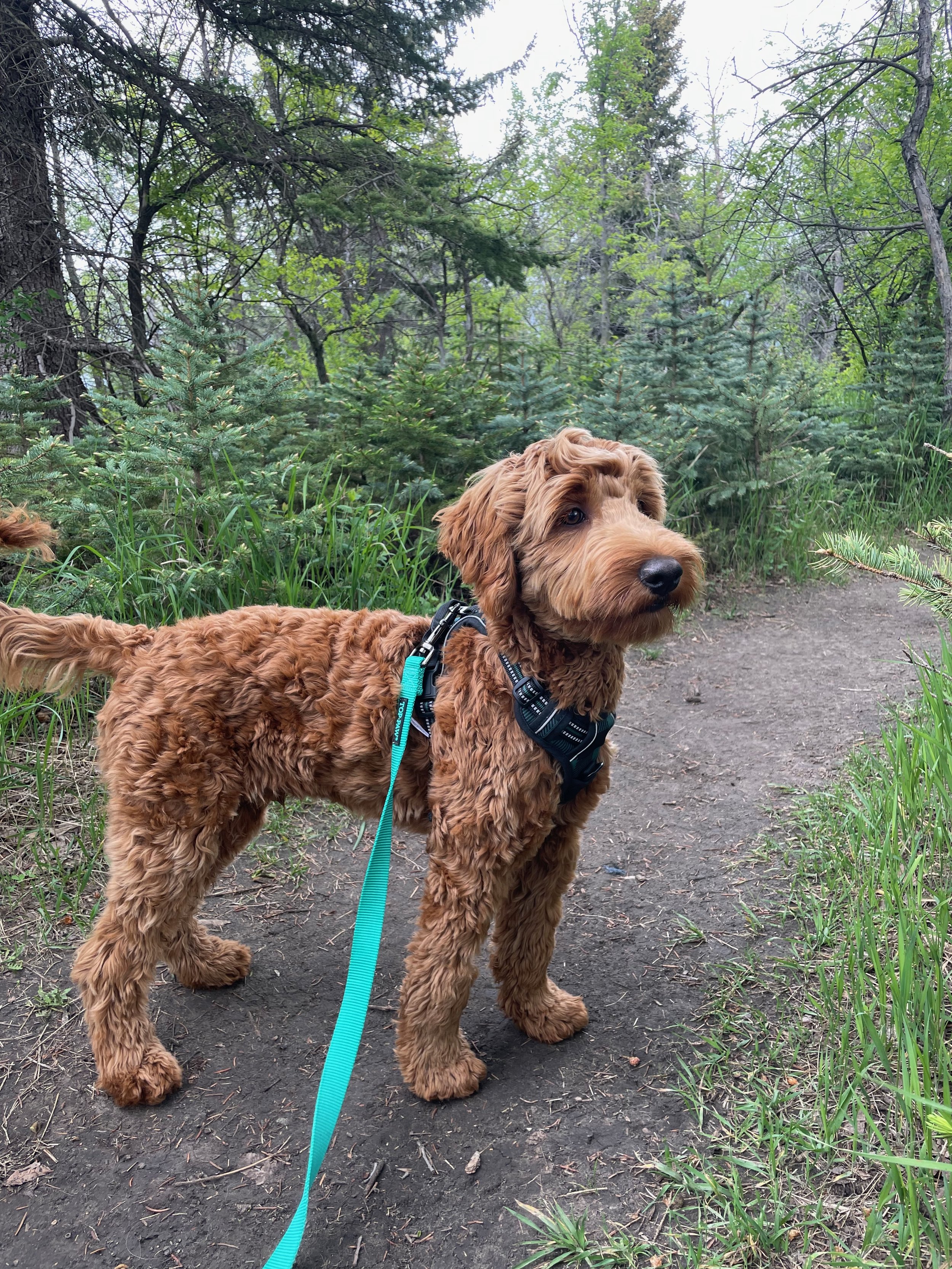
Ham at six months (©2024, Deborah Clague).
Introducing the latest winner of the canine Powerball lotto – Hampton Augustus Cuddlebug Clague, a miniature goldendoodle to be henceforth known as Ham:

Ham, five-weeks-old (©Deborah Clague)

Ham, six-weeks-old (©Deborah Clague)
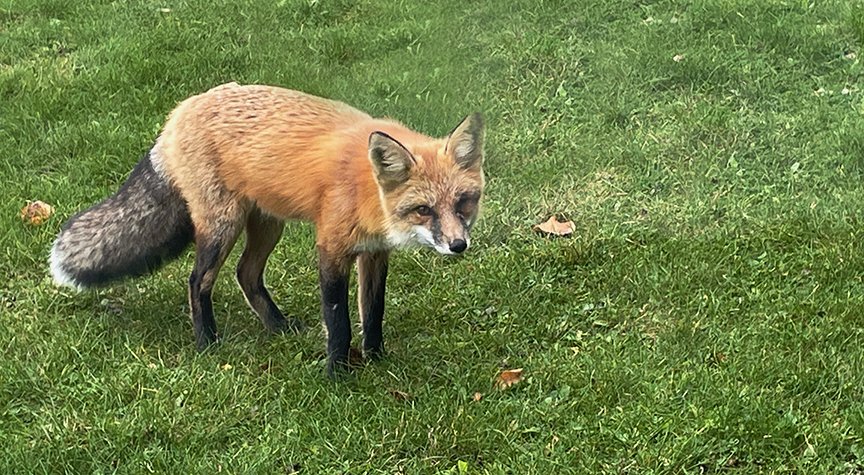
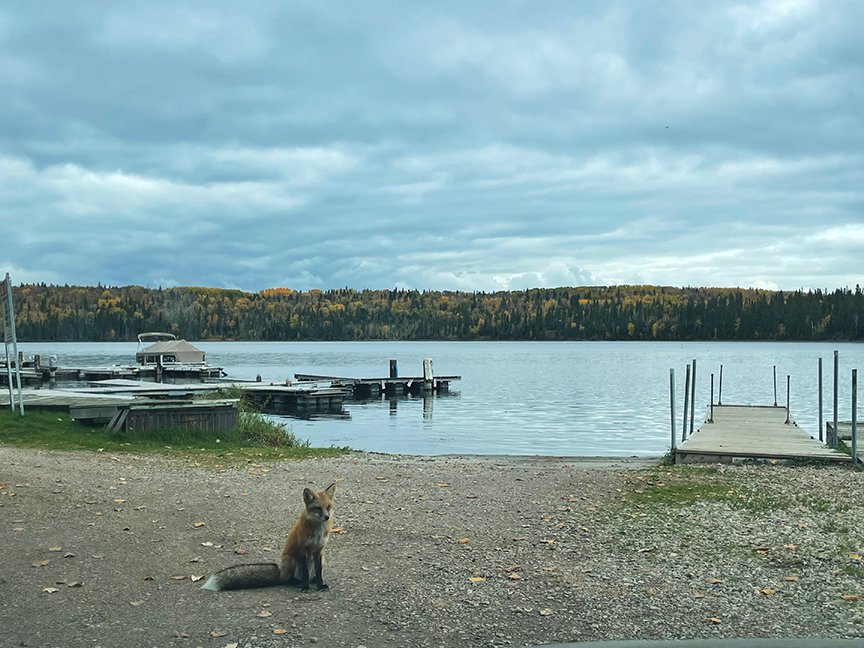
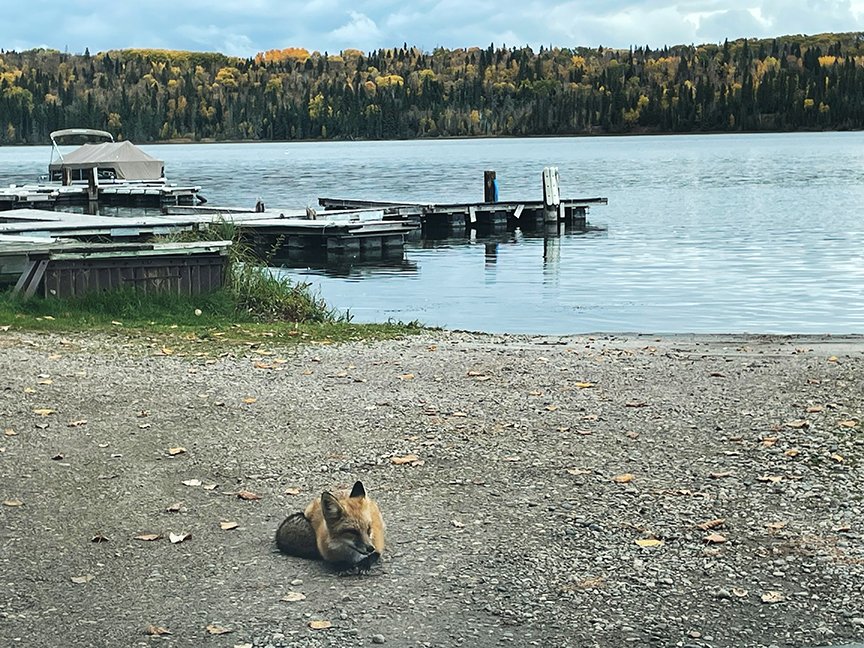
Before the first snowfall, I spent a day solo hiking in Prince Albert National Park. I wasn’t alone though. I made friends with the one-eyed fox of Waskesui.

One-eyed fox at Narrows Marina, Prince Albert National Park, Saskatchewan (©2023, Deborah Clague).
Fox at Narrows Marina, Prince Albert National Park, Saskatchewan (©2023, Deborah Clague).
Fox at Narrows Marina, Prince Albert National Park, Saskatchewan (©2023, Deborah Clague).
Fox at Narrows Marina, Prince Albert National Park, Saskatchewan (©2023, Deborah Clague).
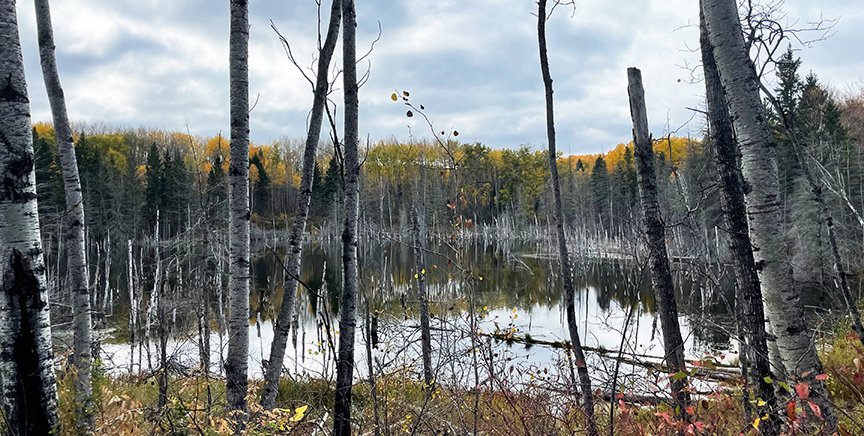
Autumn scenes at Prince Albert National Park, Saskatchewan (©2023, Deborah Clague).
It was early morning, roughly 6:00am. I’m not normally up at that time but had been awake for awhile as the room I slept in had a window facing East with the sun filtering through its gauze curtains for at least an hour prior. It seemed to signal what would become an absolutely beautiful July day. First sight I saw in the brightness as I looked over was my wee best friend, Monty, staring up at me from his own dog bed placed beside mine. “Time for a walk”, I thought to myself. As always, he seemed to know exactly what I was thinking.
The park we walked through was well-familiar from my childhood but offered pleasant surprise at that early morning hour. There was a stillness as the city prepared for the day. The wildlife, however, were visible. Monty and I counted rabbits, as a lone pelican swam in solitude at an adjacent pond. What caught my eye was the dew on the grass, glistening as the slant of light from the rising sun hit at just the right angle. It’s not something a sleepyhead like myself normally gets to observe. The quiet of that July morning left me with a simple, cherished memory that I can now only reflect wistfully on. It was such a beautiful day.
This is hard to write.
I am writing this through tears and with the knowledge that I will be editing it in the future, as a few paragraphs could never truly encapsulate what he meant to me.
Monty, my best friend and the goodest good boy I have ever known, passed away on October 5. He was two-months shy of 14 years of age (or roughly ninety-four in dog years). I am completely heartbroken.
I adopted Monty two weeks after moving to a new city. After our initial introduction, I knew that we would be the best of companions … and we were. Our bond was immediate. He helped divert depression and fill the void of loneliness in traversing an unfamiliar place. And I, in turn, loved—and spoiled!—him endlessly with affection and adventure. From leading him on hikes through the scenic Rockies to Monty helping me emotionally navigate the early, unexpected loss of a parent, he was a trusted sentry in my life with the aim of keeping me protected from ills both seen and invisible.
In later years Monty lived with my mother, acting as an unofficial therapy animal for someone beginning their own new life after being widowed. While I missed him terribly, I knew that this was needed. I always felt his gentle, sweet nature was made for assisting people in times of need.
There are parks and hidden trails in my hometown that I will forever associate with his memory because of how well we travelled them.
And I know his spirit will continue walking them with me in the future.
Longevity of life is a privilege not everyone gets to experience—and it is this understanding that helps lessen the sadness I currently feel. I am so thankful for the wonderful memories I got to experience with both my grandfather and Monty. They both lived full lives well into (their respective) old age. If I brought them as much happiness as they shared with me, then we will have both lived a wonderful life.
As I reflect on their legacies, I keep returning to the idea of “presence”; the active presence they both made to be included in the lives of others. Active engagement with the world and beings around them. Active listening to others as they speak. Active, genuine affection towards their family and loved ones. Actively being there for someone when needed. We can gain personal strength from observed lessons of their character.
May they have parted this world knowing the depth of my love for them both.
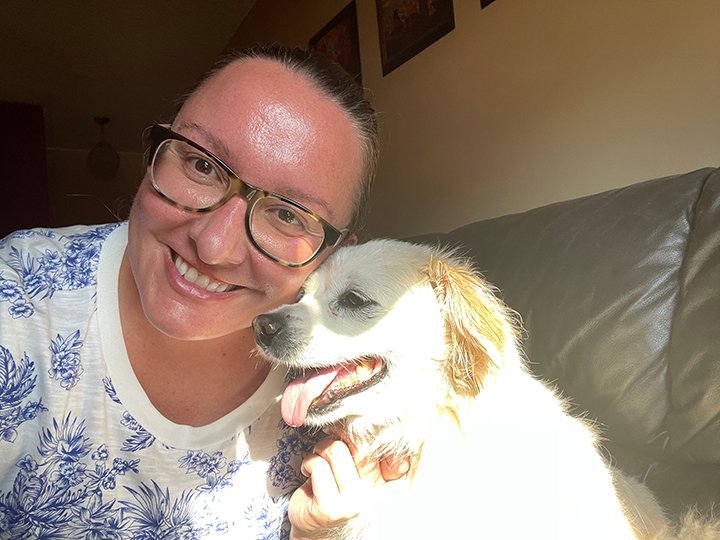
Me and my Monty this past summer (©Deborah Clague, 2023).

The first time I saw Monty in 2010 (©Deborah Clague, 2010).

My beautiful boy in 2018 (©Deborah Clague, 2018).

One of my favourite pictures of Monty. He was always smiling (©Deborah Clague, 2019).
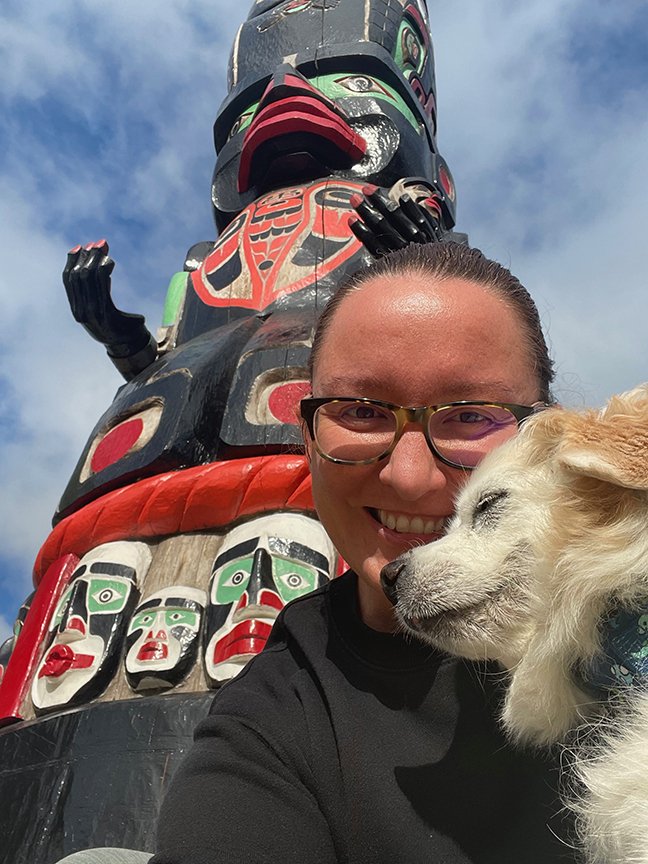
Monty and I at Assiniboine Park, Winnipeg (©Deborah Clague, 2023).
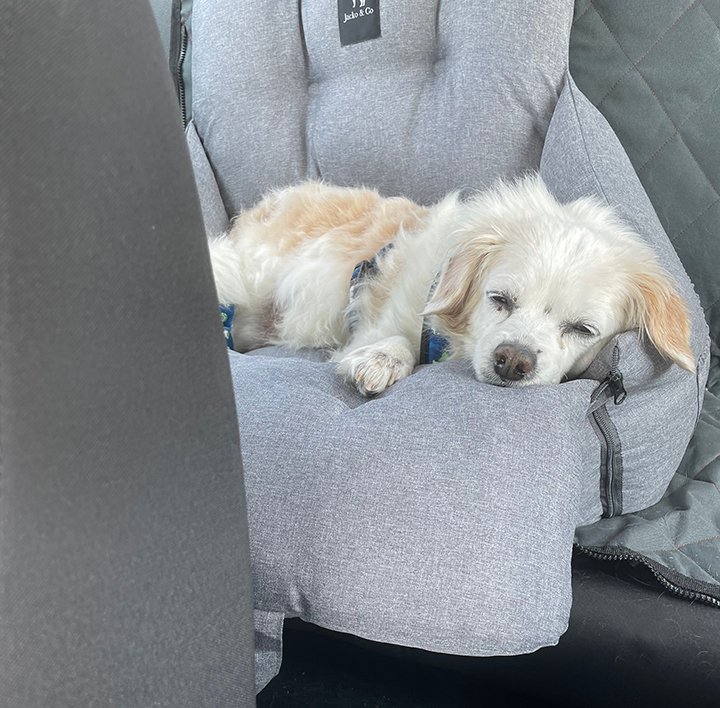
One of the last photos of my best friend in the universe, Monty (©Deborah Clague, 2023).

My grandfather, my grandmother and newborn me (©1980, Deborah Clague).
Last summer, a chance encounter resulted in meeting my extended family in Banff, Alberta. They had attended the Calgary Stampede, which my grandfather tried to visit annually in order to watch the bull-riding competitions he so loved. He was a cowboy at heart. A stoic, gentle soul with Manx roots who grew up on the Canadian prairies. Self-sufficient at a young age, he was a hard worker with strong character and moral upbringing that seemed to encapsulate the image of the good guy in old Western films. And I was related to him. I was always so proud to be of his blood.
Treating us to Tim’s (his favourite spot to converse and pass the day), conversation evolved from life in Winnipeg to memories of my father to eating potatoes … and only potatoes.
As I sipped my peppermint tea, I laughed and cracked a joke about such a diet until my aunt chimed in that my grandfather wasn’t kidding. He didn’t eat vegetables. He only ate potatoes. I looked over at him and his blue eyes twinkled with a warm smile as he confirmed it again.
“There are a lot of ways to eat potatoes” he remarked. And yes, I agreed that there was.
At ninety-two-years-old (at the time), still active and lucid, I figured his lived experience with this starchy diet was a valuable indicator of the stock which I bore.
I have many valuable memories of my grandfather. Growing up I spent a lot of time at his small home, amusing myself with the toy of the day as he sat in his recliner and held court with my father and other guests. Christmas was always an event. My entire extended family would congregate with homemade potluck as a turkey cooked in the oven and then spend hours catching up with each other, gossiping and sometimes arguing about politics. Between the wall of noise, multicoloured lights, and fragrant pine air of a real Christmas tree, it would feel like sensory overload of the best kind.
One thing missing was his partner, my grandmother Beatrice. She was the love of his life. I never got to know her. She passed away from breast cancer at the age of forty-nine in 1981, right after I was born. He never remarried, nor sought out female companionship, ever again.
Life was rich though. In later years, after retiring from his blue-collar career, my grandfather took opportunity to see the world. His favoured spots seemed to be in warm climates where he could relax under a palm tree and gaze upon the Pacific. Hawaii, in particular, seemed to call his name. Oahu was his home for several weeks during the long, dark and infamously cold Winnipeg winters. I sometimes think the “travel bug” is more a gene for exploration and adventure that he passed onto me. He was a cowboy in spirit after all.
The last time I saw my grandfather was that summer of 2022 in Banff. In retrospect, it felt seminal. We were there to pay tribute to my father by scattering his ashes at a place he so loved, under the shadow of mountains with pine once again perfuming the air and a surprise visit from a big-horned sheep who curiously watched our makeshift ceremony from afar. The weather was beautiful and by chance–or by angels–we were able to reconnect as our paths crossed thousands of kilometres from home. Fate had intervened and given us a beautiful goodbye.
My beloved grandfather passed away on September 20, seven days after his ninety-fourth birthday.
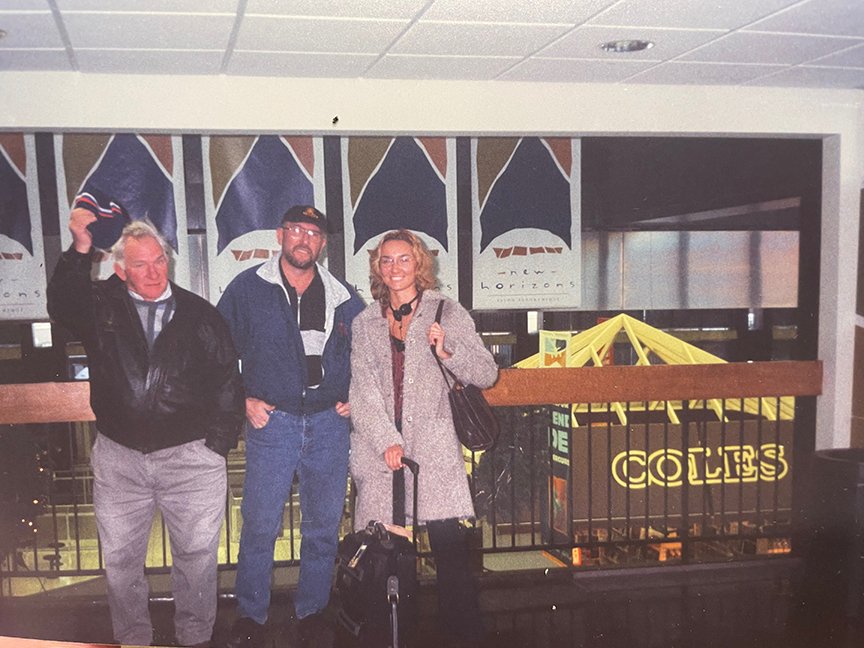
My grandfather, my dad and me at Winnipeg airport (©2002, Deborah Clague).
I grew up in a blue collar, working class neighborhood, the type of which is not lucrative to build today. Located in south Winnipeg, it is surrounded by agriculture, once-secluded monastic ruins, and a landfill. The Red River snakes through its easternmost boundary. As an only-child, I explored this space by bike and foot on my own creating stories in my head of adventure that were bigger than anything present in the reality of suburbia. While I didn’t grow up wealthy, my imagination was allowed to flourish and became rich.
Approaching the road leading to the neighbourhood I grew up in during a recent visit to my hometown, an encampment consisting of several tee-pees, canvas tents and a longhouse caught my eye. As did several news trucks. It was the start of a blockade protesting government inaction in the search of a Winnipeg landfill for the remains of two Indigenous women who were murdered and disposed of in a most inhumane way. Discourse surrounding the decision centred on cost and safety, but was remiss in excluding race. The protestors vowed to stay until a search was conducted. During my childhood of backyard and beyond exploration, this isn’t something I ever encountered or learned about. Although, it probably was by design.
It is only in recent years that I’ve learned about Canada’s true history with its Indigenous population (thanks in big part to an employer that prioritizes this education for all staff). Now whenever I hear news stories like this, I see how First Nations communities are transparently treated as “other”. As a different, other sub-class of people denied the opportunities and, at times, dignities, that are offered to the general population. Being forced to accept that your loved ones are viewed as literal trash is part of that. I can’t imagine anyone else subjected to that without at least an attempt for proper closure.
Books of wonder and fantasy offered escape as a kid. But the books I gravitate towards as an adult are rarely light. The words on the page can be dark and cause discomfort as is the case with Red River Girl: The Life and Death of Tina Fontaine by Joanna Jolly. This was my summer reading before I knew about the protests at Brady Road landfill but each is intertwined with the other and needs to be studied in tandem. Tina was murdered and disposed of in the Red River in 2014. This discovery led to federal government action on an inquiry into the many missing and murdered Indigenous women in Canada. Some argued this was long overdue as the phenomena of MMIWG2S stretched back decades (and continues today).
While reading Red River Girl, I couldn’t ignore the contrast of our adolescence. From a young age, I was encouraged to discover, supported to grow, and empowered to become. I felt safe and had a sense of belonging in my community. Tina never had these opportunities. At just fifteen, she had a very, very different life than my own. One punctuated by loss, addiction, exploitation and abuse that no child should ever have to endure. Her story’s ending also lacked closure; the main suspect in Tina’s murder was acquitted.
The book was a hard read that shared a Canadian story that is ongoing. Indigenous women and girls are the most vulnerable members of our society. Canada, and, as such, Canadian society, needs to do better in ensuring their wellbeing is protected and their value to our cultural mosaic is respected.
As I prepare to depart Winnipeg, the protest at Brady Road landfill continues.


