On the Grid

Some scenes from a lazy afternoon spent exploring the grid roads of Saskatchewan:

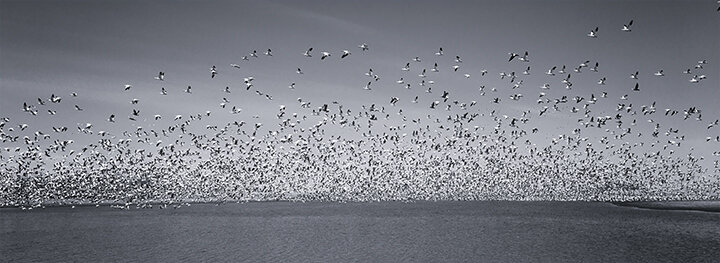
Hundreds, perhaps thousands, of migratory snow geese take flight from a pond located adjacent to a grid road in rural Saskatchewan (©Deborah Clague, 2021).

Hundreds, perhaps thousands, of migratory snow geese take flight from a pond located adjacent to a grid road in rural Saskatchewan (©Deborah Clague, 2021).

Snow geese take off in flight after our car disturbed their peace (©Deborah Clague, 2021).

Snow geese take off in flight after our car disturbed their peace (©Deborah Clague, 2021).

Snow geese in flight (©Deborah Clague, 2021).

Snow geese in flight (©Deborah Clague, 2021).

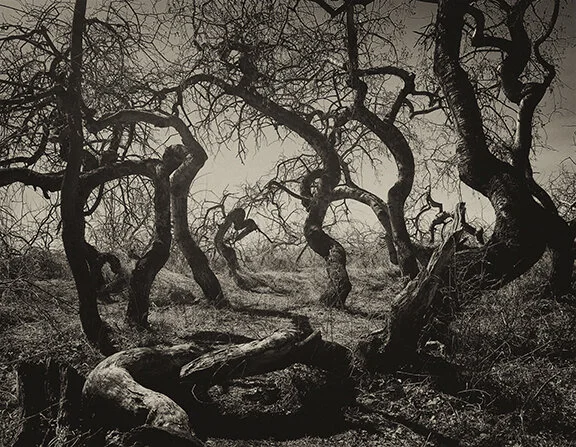
Crooked Trees (©Deborah Clague, 2021).

Crooked Trees (©Deborah Clague, 2021).

Welcome to the Crooked Bush from Friends of the Crooked Bush (©Deborah Clague, 2021).

Welcome to the Crooked Bush from Friends of the Crooked Bush (©Deborah Clague, 2021).

Like a scene from a fairy tale, the Crooked Trees of Saskatchewan (©Deborah Clague, 2021).

Like a scene from a fairy tale, the Crooked Trees of Saskatchewan (©Deborah Clague, 2021).

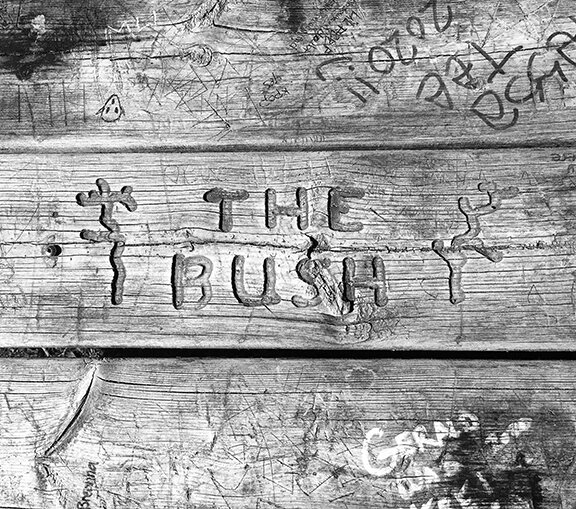
Deborah was here – The Crooked Trees, Saskatchewan (©2021, Deborah Clague).

Deborah was here – The Crooked Trees, Saskatchewan (©2021, Deborah Clague).

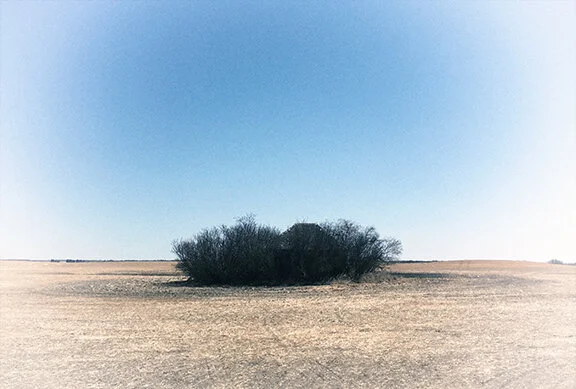
In the bush – an abandoned house consumed by trees, rural Saskatchewan (©Deborah Clague, 2021).

In the bush – an abandoned house consumed by trees, rural Saskatchewan (©Deborah Clague, 2021).

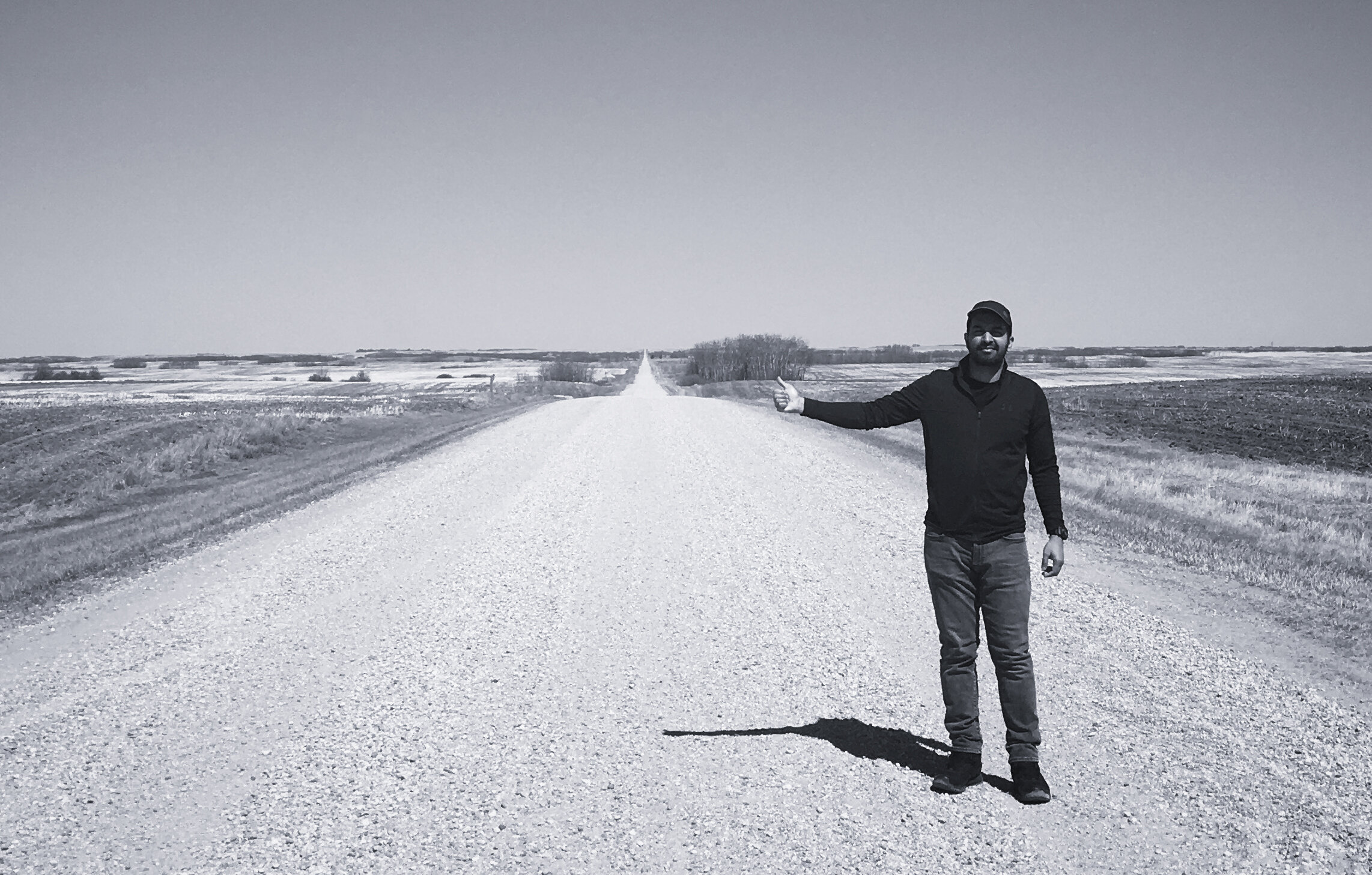
Hitchin’ a ride (©Deborah Clague, 2021).

Hitchin’ a ride (©Deborah Clague, 2021).

Main Street, Hafford, Saskatchewan (©Deborah Clague, 2021).

Main Street, Hafford, Saskatchewan (©Deborah Clague, 2021).

7 Star Restaurant, Hafford, Saskatchewan (©Deborah Clague, 2021).

7 Star Restaurant, Hafford, Saskatchewan (©Deborah Clague, 2021).

Where the buffalo roam (©Deborah Clague, 2021).

Where the buffalo roam (©Deborah Clague, 2021).

Third Wave

The third wave in Canada is relentless. Where I live, the stories break my heart; I know that all of the other provinces, territories and Treaties have their own tragedies I haven’t heard. And probably never will, because it is all so overwhelming. The world is heavy right now.

I read one journalist’s article on how “the dead don’t feel dead, they feel disappeared” and it made me think about how one day we will look back on this and be horrified by what we lived through. How death—something western culture shields itself from—could not be escaped, for it became omnipresent. The nightly death counts on the news are strange enough; now, with India being devastated by COVID-19, we are updated with even more morbid visuals. Comprehending abstract numbers is one thing; actually seeing bodies piled in row upon row of pyres all alight is quite another.

As is putting a face to a statistic.

These are a few of the local stories that gave me pause this week. They are all from my area. Their stories deserve to be heard. The survivors need to be supported.

32-year-old father of two dies from COVID-19 eight days after being diagnosed. A GoFundMe is raising money for the children’s education.

Father dies of COVID-19 days after couple’s third child born. His wife has also tested positive and remains in hospital. A GoFundMe is raising money to support the family.

Well-known local chef loses his battle to COVID-19, leaving behind a wife and two children. A GoFundMe is raising money to support the family.

Siblings lose both parents to COVID-19 within months of each other. A GoFundMe is raising money to support the family.

Beloved teacher loses his battle to COVID-19. A GoFundMe is raising money to start a scholarship for Indigenous students in his name.

365

It’s been just over a year since the pandemic was officially announced. The last three hundred sixty five days have been a rollercoaster of panic, worry, depression, anxiety, boredom, solitude, hope … and now with misguided (or non-existent) lockdown procedures and a terribly mismanaged roll-out of vaccines in Canada combined with an increase of deadly variants of COVID-19, the cycle has started anew.

I still consider myself a lucky one; I’ve been working at home for the entirety of the past year, converting a sunroom with a westward view that I once used as a reading area into a cozy 9 to 5 space with lots of natural light. My active social circle has decreased to only one—my partner—but remains a source of elation. Being around someone 24/7 through sickness and in health, Doritos stress-binging and green smoothie regret, can lead to issues—and I predict an increase in divorce in the aftermath of the pandemic—but our companionship has been nothing but enriching. I haven’t tired of the conversation or silences in between.

I also don’t venture out much. With this newfound expansive pool of free time, I daydream, I read and I catch up on a long streaming list that I’m behind pop-culturally. I’m a natural introvert, so this hasn’t been hard. In some ways, this pause on life has been beneficial. But that statement is not universal; I have not lost someone. I have not been sick and am not experiencing long-term health issues as a result of it. I have not been economically devastated. I have not been undervalued for my contributions to society by being labelled “essential” and sent to the frontlines with no recognition beyond pacifying words. While this event has been a monumental provocation to our collective mental health, wellbeing and structure of community, it has also been a time to step back and reframe perspective. Things cannot - and should not - remain the same moving forward.

It is my hope that the blinding glow of unsatiated capitalism is dimmed through realization of the importance of community and a renewed respect for nature, and how having those work together in concert is the only way to navigate our current global crises. It is my hope that your family (by birth or by choice) has all of the supports they need to live a life safely unencumbered by the whims of those who choose chaos. I also hope we eventually understand that we make the world a little bit better (or worse) through our actions, however minimal.

It’s been my observation throughout life that people don’t like change, no matter what they say when there’s a colleague from HR in the room. The majority do not like altering their comfortable, familiar behaviours unless there is an immediate reward that they deem worthwhile. We’re at a crux in the pandemic where I still encounter those living in their own self-centred world of delusion including one in my own building that takes down mask signage and vandalizes supplied sanitizer, as well as politicians that could really make an impact on the disease with shorter, more restrictive lockdowns while providing business supports but choose instead to bury their heads in the sand at all costs. Including human life. How do you influence those that don’t see the forest for the trees? What type of reward works for them? Is it even worth considering?

I’m not sure on all the solutions. But I do have all the time in the world to contemplate them.

Winter City

I’m a four-season girl. I’ve grown up in a climate that had four distinct seasons and I definitely appreciate each of them, including winter. A recent polar vortex caused temperatures where I live to dip below -42 degrees Celsius (-55 degrees Celsius with the windchill!), so when it warmed up to a relatively “balmy” -14 (-24), we decided to take the opportunity to get some fresh air, go for a hike and explore life beyond the walls we’ve been surrounded by as a result of the pandemic.

Wanuskewin has been a gathering place for nomadic tribes for over six thousand years. Today, it is a designated heritage park showcasing Indigenous art and culture, as well as an active archaeological site providing context and connection to our history from present day Treaty 6 territory in Saskatchewan, Canada. It also offers a museum, restaurant featuring Indigenous cuisine, and numerous hiking trails to explore the Northern Plains.

Peripheral People

It is not natural for me to be this sedentary. The innate desire to wander and explore comes as natural to me as my sensitivity towards animals or my predisposition to foods heavily flavoured with garlic. But here I am, on my couch—the very same couch that I’ve been sitting on for nearly a year reading, writing, watching Netflix—and while I’m bored, it’s become the new normal of my life. The sun rises. The sun sets. My only escape is through a screen.

Another aspect of “the good ol’ days” I’ve recently come to miss are the peripheral people who’ve been in my life. People that I’ve never formally met or held conversation with but who played as background actors in the scenes of my day. There is the Somali man, slight in stature, who stood on the corner of my block each morning enjoying a cigarette while observing traffic through eyeglasses perched half-way down his nose. He’s performed this daybreak ritual for years. We’d occasionally nod our heads at each other in recognition of being neighbours of sorts but I don’t know his story and he doesn’t know mine.

There were the people employed at a coffee shop across the street from my office who crafted one of my favourite sandwiches (saskatoon berry-turkey with arugula and brie on toasted ancient grains). Within the past year, it has sadly shut its doors. I never got to know their names. Besides being a familiar face, they never got to know mine.

The time I’d walk up to the entrance of my condo at the end of each workday would occasionally be mirrored in commute from the opposite direction by a bearded man who lives on another floor in the building. We would make convivial small talk while checking our mailboxes. I learned he worked at the nearby hospital. He would learn that I was involved in the arts. But it was just a slight connection. Enough for acquaintance but not enough for anything more meaningful outside the confines of an elevator. I never learned his name. He never learned mine. I haven’t seen him in over a year.

While I lament their absence, these characters have been recast for the current season.

Most people in my building now work from home and while I have not met a lot of them, I do get a sense of their day through the sound filtering from the hallways and above. One of my neighbours plays an instrument. I can hear the muffled output from their amp every morning around eleven a.m.. They also have a small dog. I’ve never seen it and wouldn’t be able to identity breed but can hear the faint pitter-patter of its paws walking across the laminate floor. There’s a family at the other end of the hallway that moved in just before the start of the pandemic. Their child, perhaps feeling bored and caged, spends most of the day screaming in frustration at the top of her lungs. Her parents—and their immediate neighbours—are often in my thoughts. And then there’s the contractors I occasionally pass. I wouldn’t be able to recognize their faces but I do remember their masks.

As the pandemic forces us into a second year of distance and isolation, I’m starting to feel sadness at the loss of the seemingly unmemorable interactions I had with strangers in the past. Their presence was familiar where nothing in this current world is. They offered a form of stability to my days and I genuinely miss them … even though I didn’t know them.

The Wilds

The other night, I went to close my shades and became enraptured by the night sky. During a prairie winter, the sky is normally densely overcast and claustrophobic but on this night I stared out at the stars - albeit few, albeit faint - as well as some scattered, low-hanging cumulus clouds that reflected the crimson light of the city. During a time when I feel I’ve become completely disconnected to nature, I feel like my appreciation for it (and need to preserve it) is growing. When you’ve been stuck in your home for almost a year, the desire to explore the wilds is all-consuming. This pause has given me time to reflect though, on life and what really matters.

In late 2004, I left my job at an advertising agency to freelance. A lot of 2020 is reminding me of that time. I was working at home on a bondi blue iMac when the earthquake and tsunami struck countries bordered on the Indian Ocean. I recall non-stop footage of it playing on the television in the background as I tried to work. I’m an empathetic person, sometimes overly so, and the sadness of it all really affected me. With 230,000+ dead, it was the worst disaster I’d witnessed in my lifetime.

Sixteen years later, I’m once again working at home—again, on an iMac—but this time the disaster hits closer. I’m not watching the tragedy of a far-away land through the safety of a screen, I’m living it everyday. I’m connected to risk and reminded of it through the daily death count on the evening news. My empathy here serves me well. With over two million deaths worldwide, it’s important not to lose sight that these were human beings who lived and loved and deserve to be remembered. Regardless of age, health or any other factor used to discriminate, they are people.

And people are what really matter in life.

The most happiness and bliss I’ve felt have been in the presence of people I loved. The greatest memories of my youth are traveling the west in an old RV with my parents, visiting such legendary sites as Yellowstone National Park, the Rocky Mountains, Deadwood and Wall Drug (okay, that last one is legendary for a different reason but memorable all the same). I remember the fun of playing license plate bingo with my dad or having my mom wash my hair in a rest stop sink because that’s where we slept overnight in lieu of a campground. I didn’t grow up wealthy, so moments like this were currency towards future resolve. Some of the fondest memories of my twenties are just cruising around Winnipeg after-hours listening to music and being present with someone who values and understands me through shared experience.

The brief high one gets through a material purchase does not compare to receiving a message from an old friend who felt the need to check in and say “hello”. Having someone remember and acknowledge your existence is to feel seen. To feel human. These moments have been some of the most memorable during the pandemic.

I’m thankful to have someone to share this moment in time with. Another soul to bear witness to history and the real, raw emotions and fear we all felt while living it. Having someone to talk with, to play with, every day is helping me get through. I look forward to the day when we can one day explore the wilds again, together.

My mom and I somewhere in the Rockies. My dad’s truck is pictured in the background. Before buying an RV, we used to sleep in the back of the truck during family road trips (©Deborah Clague).

My mom and I somewhere in the Rockies. My dad’s truck is pictured in the background. Before buying an RV, we used to sleep in the back of the truck during family road trips (©Deborah Clague).

My mom and I, probably on the same trip as she’s wearing the same clothes. For some reason, I’m not wearing pants (©Deborah Clague).

My mom and I, probably on the same trip as she’s wearing the same clothes. For some reason, I’m not wearing pants (©Deborah Clague).

Eleven-year-old me in Yellowstone National Park (©Deborah Clague).

Eleven-year-old me in Yellowstone National Park (©Deborah Clague).

Give It Away

It was upon entering the seventh grade, and thus starting a new school, that I noticed my classmates’ fashion and music sense change. Some of it may have been attributed to naturally evolving tastes, some of it to that age-old desire to fit in and conform to the herd. There were seniors to impress, so all those New Kids on the Block tees were replaced by Metallica, Nirvana and the eight-pronged asterisk logo of the Red Hot Chilli Peppers.

I wasn’t always aware of what was trending or cool as I didn’t have MTV or the MuchMusic tv channel growing up, instead relying solely upon pop-oriented radio and network shows like American Bandstand and Solid Gold to form opinions on what I liked (and yes, I was a New Kids fan). One thing I did know though was that whenever my mom heard a Red Hot Chilli Peppers song come on, she would immediately change the channel. She hated them. Absolutely loathed them. I wasn’t a fan myself but I often wondered what this band—led by a perpetually shirtless, tribal tattooed lead singer who seems contractually obligated to sing about California—could have done to offend my mother?


Scandalous rock-and-roll memoirs were once my favourite literary genre. I attribute this to the fact that I’m an introvert who gets to live vicariously through the tales of wanton lust and debauchery normally lining their pages. So when I saw ‘Scar Tissue’ written by Anthony Kiedis, lead singer of the Red Hot Chilli Peppers, on the bargain shelves of my local McNally Robinson, I decided that $7.99 was a steal of a price to pay for 465 pages of trashy escapism.

I didn’t foresee the added expense of requiring gallons of bleach to bathe in while reading it though.

Maybe it’s because I’m older, wiser and have less tolerance for people like this but Anthony Kiedis’ recollection of life is less that of a rock star and more of a self-indulgent, misogynistic narcissist who got lucky. His story is that of a high school truant who failed to mature because he’s always been rewarded for his deplorable behaviour. There was no insight into his band, his craft or the era of which they dominated, every chapter instead consisted of sharing, in detail, all the women he had sex with along with rating their performance. He even threw in a few pictures of his exes posing topless (for what purpose, I will never know). Really creepy though considering he was 43-years-old when the book was published is how many of his boasts were about his girlfriends and other conquests being underage, praising one sixteen-year-old paramour for looking after him while they “played house” and:

EhKxzqUXsAAjSM4.jpg

While bullshit likes this takes up a bulk of the book, the other half—the only part I am mildly sympathetic to—describes the rinse-and-repeat cycle of drug addiction. Anthony goes into great detail in regards to his pursuit of this demon, not just the feeling of taking the substance itself but also admitting how other elements made the experience so thrilling such as how a florescent purple light illuminating the exterior of a seedy L.A. hotel beckoned him in as the perfect place to hole up for a few days to shoot heroin. His many (many) trips to rehab are also documented.

But while that may explain behaviour, it doesn't excuse it. Ultimately, this is long-winded braggadocio.

What I learned from this book is that sometimes mother knows best.

I will concede on this though. Despite my repulsion, he did write one of the definitive songs of the 90s. Shame I can no longer enjoy it.

Favourite line: “[Girlfriend] Jennifer had slept with Chris Fish, the keyboard player for Fishbone, one of our brother L.A. groups, while I was out on tour. But it still didn’t compute with me. I could have seen if she’d slept with Angelo Moore, who was the good-lucking lead singer. But Chris Fish—a guy with bad dreadlocks and worse fashion sense?”


Prince: The Beautiful Ones
Written by Prince and edited posthumously by Dan Piepenbring

Another music memoir that is a little less linear as it was only partially written and still in the production phase before Prince’s untimely death in 2016. The book offers a brief glimpse into the life and mind of a legendary performer who carried his air of mystery into legend. The book is interesting but at times hard to read, as one of Prince’s requests was that visual icons - similar to when he changed his name to an unpronounceable symbol - be used in place of actual words.

Favourite line: “I like dreaming now more than I used to. Some of my friends have passed away, and I see them in my dreams. It’s like they are here, and the dreams are just like waking sometimes.”